Quel est le processus de base du traitement de Fenton ?
Le processus d'oxydation de Fenton est principalement catégorisé par les chercheurs en quatre étapes : ajustement du pH de la solution à 3-4, initiation de la réaction d'oxydation, neutralisation de la solution à un pH de 7-8 et floculation/précipitation.
Diagramme de flux du processus Fenton
-
Réactif de Fenton :
Le réactif de Fenton standard est un système liquide homogène composé de peroxyde d'hydrogène et d'ions ferreux. À partir de ce réactif standard, on obtient, par modification et combinaison des conditions réactionnelles, une série de méthodes de type Fenton présentant des mécanismes similaires, telles que les méthodes électro-Fenton, photo-Fenton, ultrasonique-Fenton et micro-ondes-Fenton.
-
Ajustement de l'acidité (ajustement du pH) :
Il s'agit du procédé d'ajout d'acide sulfurique concentré ou dilué pour ajuster le pH des eaux usées à une plage acide adaptée à la réaction d'oxydation de Fenton.
-
Durant cette étape, on utilise généralement des méthodes telles que le mélange hydraulique, l'agitation mécanique ou l'agitation pneumatique pour accélérer la diffusion et le mélange homogène de l'acide avec l'eau d'alimentation. La durée du mélange ne doit pas être inférieure à 2 minutes.
-
Mélange de catalyseurs :
Cela fait référence à l'étape du processus consistant à ajouter le catalyseur et à s'assurer de son mélange homogène avec les eaux usées.
-
Durant cette étape, une solution de FeSO₄ (ou des minéraux de fer, du fer zérovalent) est généralement ajoutée quantitativement à l'aide d'une pompe doseuse, servant de catalyseur. Des méthodes telles que le mélange hydraulique, l'agitation mécanique ou l'agitation à l'air sont utilisées pour accélérer la diffusion et le mélange homogène du sulfate ferreux avec l'eau d'alimentation. La durée de mélange ne doit pas être inférieure à 2 minutes.
-
Oxydation de Fenton :
Cela fait référence au processus par lequel le réactif de Fenton génère des radicaux hydroxyles en milieu acide, détruisant la structure de la matière organique et finissant par l'oxyder/la décomposer.
-
Réaction d'oxydation :
Cela fait référence à l'étape du processus consistant à ajouter l'oxydant (peroxyde d'hydrogène), à le mélanger soigneusement avec les eaux usées et à laisser l'oxydation de Fenton se produire en présence du catalyseur, oxydant et décomposant ainsi la matière organique dans les eaux usées.
-
Durant cette étape, le temps de rétention hydraulique doit être déterminé en fonction de la qualité de l'eau brute (DCO, pH, MES, etc.), des caractéristiques des polluants et des exigences de rejet. Le réacteur doit de préférence comporter au moins deux étages (afin d'éviter les courts-circuits ou les erreurs de manipulation susceptibles d'entraîner un temps de réaction d'oxydation insuffisant).
-
Neutralisation:
Cela fait référence au processus d'ajustement du pH de l'effluent du réservoir de réaction d'oxydation pour répondre aux exigences des processus de traitement ultérieurs ou aux normes de rejet, généralement en ajustant le pH à 7-8.
Innovation de la technique Fenton
Fenton 1.0 - Fenton traditionnel : essentiellement une combinaison d'équipements de dosage chimique.
Fenton 2.0 - Fenton en lit fluidisé : utilise un milieu pour générer davantage de radicaux hydroxyles.
Fenton 3.0 - Fenton magnétique : Réduit considérablement les radicaux hydroxyles inefficaces et améliore ainsi grandement le taux d'utilisation des radicaux hydroxyles grâce à la technologie magnétique.
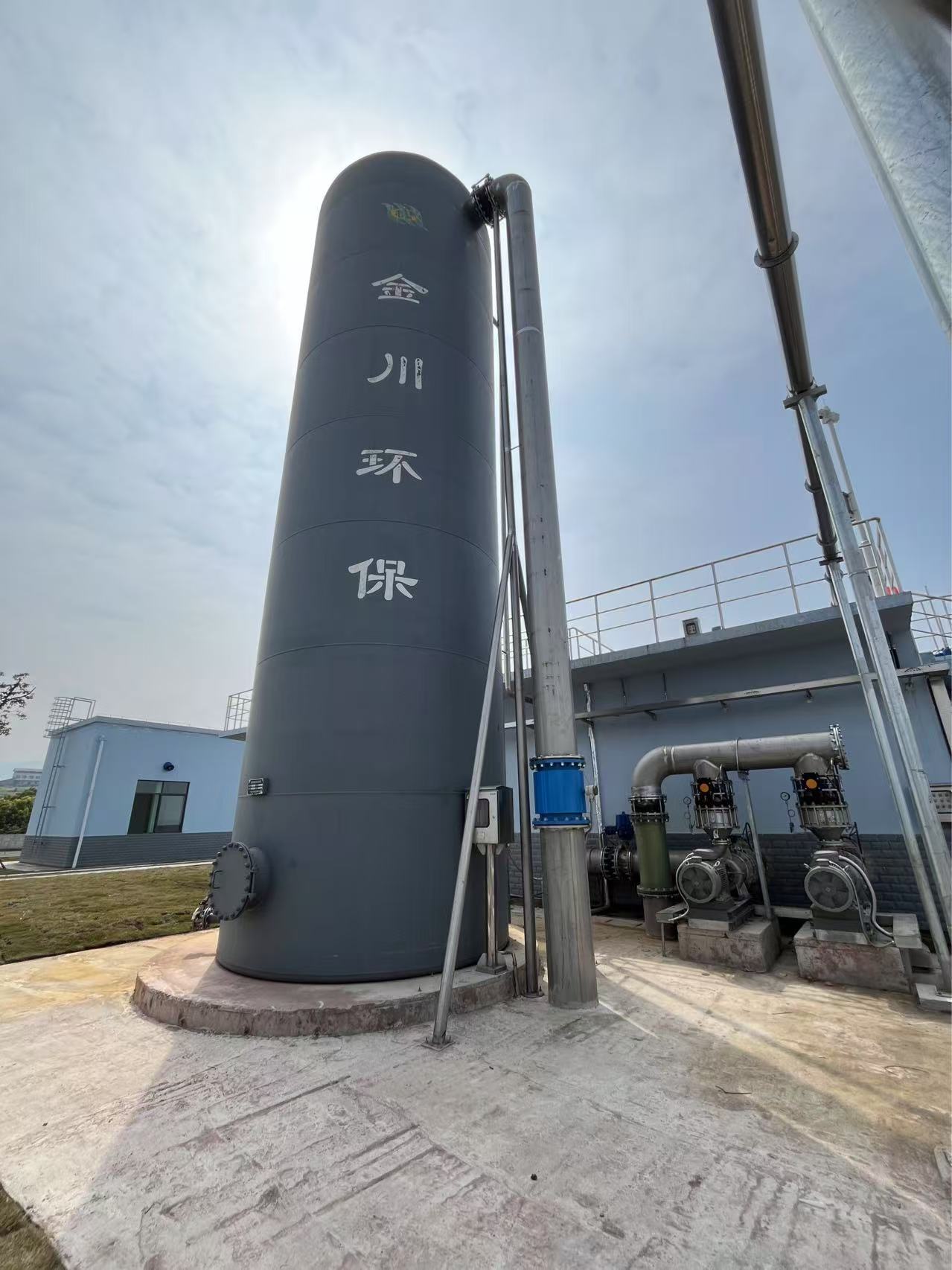
|
Aperçu comparatif des trois générations de Fenton
|
|
Technique
|
Caractéristique du processus
|
Caractéristiques de fonctionnement
|
|
Fenton
1.0
Fenton traditionnel
|
1.
Pas de réacteur + pas de média
2.
Consommation élevée de produits chimiques
3. Combinaison de systèmes de dosage
|
1. Faible taux d'élimination de la DCO, coûts d'exploitation élevés
2. Forte production de boues
3.
Forte dépendance à l'opérateur du site
|
|
Lit fluidisé Fenton 2.0
Fenton
|
1.
Réacteur + Médias (catalyseur)
2.
Utilise des supports (tels que du sable de quartz/des matériaux catalytiques fer-carbone) pour favoriser la génération de davantage de radicaux hydroxyles, améliorant ainsi l'efficacité de l'oxydation.
|
1.
Le média de consommation doit être remplacé (coût : 0,1 RMB/tonne d’eau).
2.
Taux de défaillance élevé, le réacteur est sujet à l'agglomération et au colmatage.
3.
En cas de surdosage de H2O2, l'appareil doit être équipé d'un dispositif de dégazage.
;
4
.
Impossible d'arrêter de courir
|
|
Fenton 3.0 Magnétique Fenton
|
1.
Réacteur+ Aucun média
2.
Faible consommation de produits chimiques, d'énergie et de production de boues
|
1. Coût d'exploitation global ultra-faible
;
2. Zéro panne, zéro maintenance, fonctionnement continu
3. Faible dosage de H2O2, aucun dispositif de dégazage nécessaire
4. Démarrage et arrêt à tout moment, fonctionnement entièrement automatique
;
|
Le procédé Fenton magnétique de Jinchuan présente les spécifications uniques suivantes :
-
Zéro échec
-
Les médias ne sont pas nécessaires comme catalyseur.
-
Faible consommation de produits chimiques
-
Faible consommation d'énergie
-
Faible production de boues


 Supporté en réseau