Appelez-nous à tout moment
+8613570976228




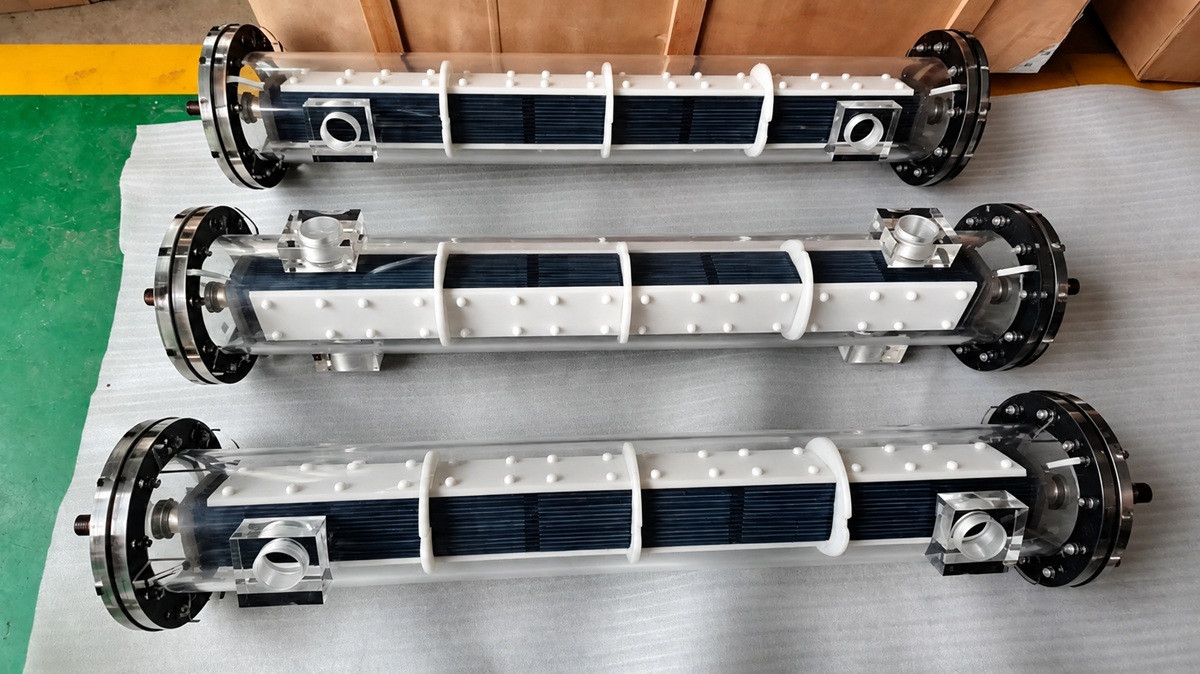
MMO anodes work by discharging protective current through a thin catalytic mixed metal oxide coating on a titanium substrate. This turns the titanium into a durable electron emitter rather than a consumable one. In cathodic protection, MMO Anode Coating Technology resists corrosion and stays dimensionally stable, which makes these anodes a preferred choice in modern systems.
Key Takeaways
• MMO anodes use a special coating to transfer current without wearing out. This makes them last for many years.
• These anodes stay the same size and shape over time. You get steady protection and less maintenance.
• MMO anodes work in water, soil, or concrete. You can adjust the coating for each environment.
Cathodic Protection Basics
How CP Stops Corrosion
Cathodic protection makes the metal you want to protect the cathode of an electrochemical cell. At the cathode, reduction reactions consume electrons instead of iron oxidation. Hydrogen liberation (2H+ + 2e- → H2) is one common reduction reaction. This electron flow prevents the metal from corroding.
Two main methods exist. Sacrificial or galvanic systems use a reactive metal that dissolves to release electrons. Impressed current systems use an external power source to drive current. MMO anodes belong to impressed current systems. These systems suit large assets and harsh environments. You will find cathodic protection applications on pipelines, harbors, concrete structures, ships, and offshore platforms.
| Aspect | Sacrificial Anode (SACP) | Impressed Current (ICCP) |
|---|---|---|
| Current output level | Low | High |
| Adjustability | Fixed | Adjustable |
| Control mechanism | Natural potential | Rectifier control |
| Response to conditions | Not adaptable | Adjustable |
The Anode's Role in the Circuit
The anode discharges current into the electrolyte. Electrons then flow to the structure being protected. In an impressed current anode system, a rectifier supplies controlled DC current. The anode releases this current into the water, soil, or concrete. The current travels to the protected structure and polarizes it.
Every cathodic protection circuit needs four parts: an anode, a cathode, an electric circuit, and an electrolyte. The anode material determines how current discharges. Impressed current anodes do not dissolve easily. They oxidize dissolved chloride ions instead. This reaction (2Cl- → Cl2 + 2e-) releases electrons without consuming the anode. The anode-to-electrolyte resistance dominates the circuit. Long, thin anodes discharge more current than short, fat ones. You must size the anode shape and surface area to match your current needs.
What MMO Anodes Are Made Of
Titanium Substrate and Oxide Coating
MMO anodes are a type of Dimensionally Stable Anode (DSA), also called Dimensionally Stable Electrode (DSE). The substrate is high-purity titanium, usually Grade 1 or Grade 2, chosen for excellent formability, corrosion resistance, and mechanical strength. A thin mixed metal oxide coating covers this titanium core.
The coating contains two key components. The electrocatalytic conductive component drives current flow, using ruthenium oxide (RuO2) or iridium oxide (IrO2), which are essential for constructing a highly efficient Ruthenium-Iridium coating Titanium Electrolytic cell. Iridium oxide is preferred for most cathodic protection applications. Bulk oxides like titanium dioxide (TiO2) and tantalum oxide (TaO5) form an oxide film that prevents corrosion of the titanium substrate.
| Coating Component | Role | Typical Materials |
|---|---|---|
| Electrocatalytic conductive component | Catalyzes the reaction to generate current flow | RuO2 or IrO2; IrO2 preferred for most CP applications |
| Bulk oxides | Prevent corrosion of the titanium substrate | TiO2 and TaO5 |
How the Coating Is Applied
Manufacturers apply the coating through thermal decomposition. This process deposits a thin oxide layer onto the titanium substrate. These oxides are seldom used alone. They are usually doped or mixed with less active oxides of higher chemical stability.
Quality control matters throughout. The MMO coating should be uniform and free from defects such as pinholes or cracks. A high-quality, defect-free coating helps ensure long anode lifespan and effective performance. MMO anodes are used in various cathodic protection applications. MMO anodes use ruthenium-iridium coated titanium and have a typical service life of 20 years or more.
How MMO Anodes Work
Charge Transfer at the Coating
The mixed metal oxide coating on your MMO anode plays a critical role in charge transfer. This coating lowers the activation energy required for current discharge. Electrons transfer smoothly from the titanium substrate into the electrolyte without requiring high voltage. The catalytic oxide layer limits the potential of the titanium substrate to a safe level. This prevents breakdown of the surface passivation film even at high current densities. You benefit from efficient current output without overstressing the anode material.
Iridium oxide within the coating provides exceptional catalytic activity. This compound possesses multiple stable oxidation states, enabling rapid redox transitions. The result is exceptionally low electrochemical impedance at the interface between metal and electrolyte. IrO2 exhibits lower electrical resistance compared to other oxides, translating to superior charge injection capabilities and reduced interfacial impedance.
Consider a device that uses MMO anode coating technology to discharge current efficiently. The coating composition adjusts to suit different environments, including seawater, fresh water, and soil. Each environment requires a specific catalytic formulation for optimal performance. Adjustable coating composition allows adaptation to various environments, further enabling stable high-current performance.
The coating material exhibits extremely low consumption rates, ensuring long service life. These rates ensure minimal material loss even when you operate the anode at high current densities. MMO anodes can operate at high current densities while achieving a 20-year design life. This MMO performance level demonstrates the remarkable efficiency of the catalytic coating.
Why the Coating Lasts
The dimensional stability of MMO anodes originates from two coupled mechanisms. First, the titanium substrate spontaneously forms a thin passive protective oxide layer when exposed to water or oxygen. If the coating is locally damaged, the titanium instantly repassivates. This prevents galvanic corrosion or dissolution of the substrate. Second, the mixed metal oxide coating functions as a non-consumable catalyst. It drives the electrochemical reaction without being consumed itself.
This contrasts sharply with traditional materials. Graphite anodes have higher consumption rates. High-silicon cast iron anodes also have significant consumption. MMO anodes, by comparison, have extremely low consumption rates. The titanium substrate provides structural stability throughout the lifespan of your cathodic protection system. You maintain consistent anode-cathode spacing because the substrate does not degrade. This fixed geometry keeps the cell voltage stable. Traditional consumable anodes experience voltage creep as the gap widens from material loss. Your impressed current anode system avoids this problem entirely.
The low wear rate of the coating ensures long service life. MMO anode coating technology supports operation across varying pH levels without degradation. The substrate itself does not participate in the reaction. Engineers refer to these as Dimensionally Stable Anodes (DSA) for this reason.
Within any anode system, the durability of the MMO material determines maintenance intervals and overall system cost. You benefit from design lives exceeding 20 years with proper sizing and operation. The coating delivers reliable cathodic protection year after year without the need for frequent replacement.
MMO vs. Traditional Anodes
Graphite and Silicon Iron
Graphite and high-silicon cast iron anodes have served cathodic protection applications for decades. These materials consume at predictable rates during operation. Graphite wears at a relatively high rate. High-silicon cast iron consumes at a moderate rate. MMO anodes consume at a very low rate. This difference translates directly into replacement frequency and maintenance cost.
Weight creates another practical distinction. High-silicon cast iron anodes weigh significantly more than titanium-based alternatives. Transport, handling, and installation become harder tasks, especially for offshore or remote protection projects. You save on logistics and labor when you specify lightweight MMO anodes instead.
| Anode Material | Consumption Rate | Weight Consideration |
|---|---|---|
| Graphite | High | Not specified |
| High-Silicon Cast Iron | Medium | Significantly heavier than MMO |
| MMO (Titanium-based) | Very low | Lighter than HSCI |
Platinum and Precious Metals
Platinum anodes deliver excellent catalytic performance. They also carry a high material cost. Your MMO anode advantages include comparable catalytic activity at a much lower price point. The mixed metal oxide coating provides similar current discharge efficiency without the precious metal expense.
Environmental conditions reveal where MMO anodes outperform platinum. High-temperature environments require specific MMO coating formulations. Platinum can be used for very high current density applications, but your MMO anode system handles most other conditions with better durability and lower cost.
Designing and Applying MMO Anodes
Current Density and Sizing
MMO anodes operate at higher current densities than most alternatives. You must match your sizing to the coating's rated capacity. Operating temperature directly influences the allowable current density at the anode surface.
• The oxygen evolution reaction at the MMO anode surface has a temperature-dependent reaction rate.
• At higher operating temperatures, the oxygen evolution reaction rate increases, which can raise the current density at the anode surface.
• If this current density exceeds the anode's design limit, it accelerates consumption of the MMO coating and may generate by-products that further degrade anode performance.
• At lower operating temperatures, the reaction rate slows, resulting in lower current density, which may be insufficient to meet cathodic protection requirements.
• Therefore, operating temperature directly influences the allowable current density: higher temperatures push toward higher current density but risk exceeding design limits, while lower temperatures reduce achievable current density.
Common form factors include tubular anodes for soil, mud, seawater, brackish water, fresh water, and concrete. Offshore impressed current protection typically uses MMO-coated titanium. A typical Electrolytic Cell Demonstrates how coating composition adapts to specific current demands.
Placement and Integration
Anode-to-structure distance, electrolyte resistivity, and current distribution all affect performance. You should position tubular anodes to ensure uniform cathodic protection across the entire structure surface. Closer spacing improves current distribution but increases installation cost.
Your anode system integrates with impressed current cathodic protection through rectifiers and reference electrodes. The rectifier supplies controlled DC current to the MMO anodes. Reference electrodes monitor the cathodic protection potential and signal the rectifier to adjust output. Suppliers offer ruthenium-iridium coated titanium electrodes and custom-shaped electrodes for various applications. This MMO anode coating technology supports diverse cathodic protection applications worldwide.
MMO anodes discharge current through a catalytic oxide coating on titanium. The substrate stays intact. You gain three benefits: efficient charge transfer, remarkable durability, and design flexibility. These MMO anode advantages keep cathodic protection applications truly reliable for decades. For long-life cathodic protection systems, they remain a proven leading choice.
FAQ
What is the expected lifespan of an MMO anode?
MMO anodes typically have a service life of 20 years or more.
Which environments support MMO anode operation?
MMO anodes work in soil, seawater, fresh water, brackish water, and concrete. The coating composition adjusts for each environment.
Why does the MMO coating resist consumption?
The catalytic oxide layer lowers activation energy for current discharge without being consumed. The titanium substrate provides structural stability throughout operation.
Droit d\'auteur @ Esegen (Guangzhou) Technology Co., Ltd Tous droits réservés.
 Supporté en réseau