Appelez-nous à tout moment
+8613570976228


Knowing exactly how to select water disinfection equipment is a critical challenge for plant engineers, EPC contractors, and facility managers. Making the wrong choice during the procurement phase can lead to severe regulatory violations, frequent system downtimes, and skyrocketing operating expenses. To ensure plant safety and efficiency, this comprehensive water treatment equipment selection guide will walk you through the most frequent water disinfection equipment selection mistakes and how to avoid them.
• Always calculate the total cost of ownership (TCO) rather than just the initial purchase price.
• Base your technology choice on fluctuating source water quality, not just ideal laboratory conditions.
• Factor in hidden maintenance and consumable costs across different disinfection technologies.
• Design with modularity in mind to accommodate future capacity expansion effortlessly.
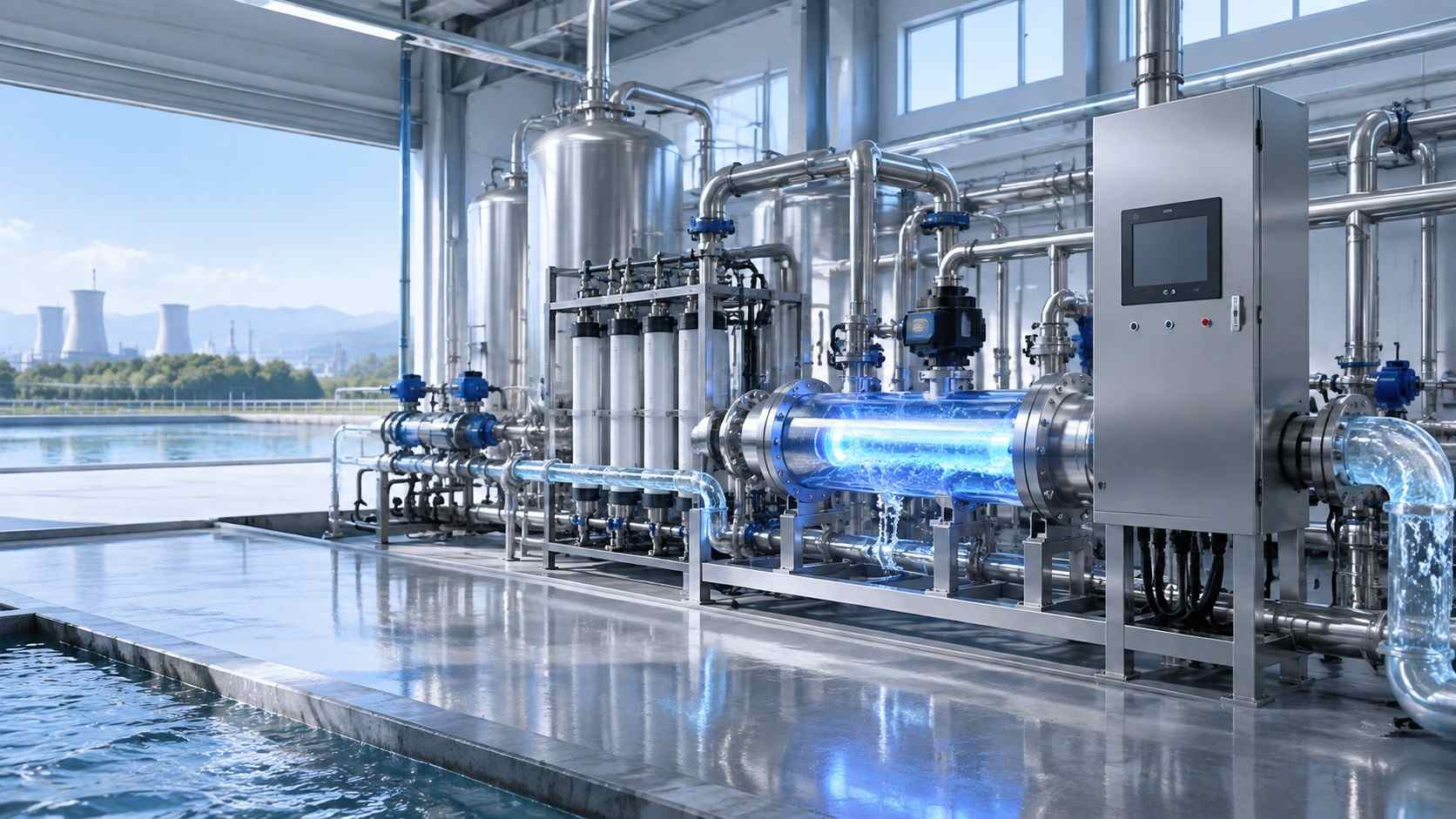
One of the most common pitfalls in industrial water disinfection system selection is making decisions based solely on Capital Expenditure (CAPEX). While a specific system might look highly attractive on a preliminary procurement sheet, it can become a financial burden over a 10-to-15-year lifecycle.
Instead of focusing on the sticker price, engineers must evaluate the total cost of ownership (TCO). For example, traditional bulk chlorine systems might have lower initial equipment costs, but the hidden expenses of hazardous material transport, specialized hazmat insurance, scrubber maintenance, and strict regulatory compliance will quickly eclipse the initial savings. Investing in an onsite chlorine generation system often requires a slightly higher upfront investment but delivers massive long-term OPEX savings by generating disinfectant using only basic salt and electricity.
A system that performs perfectly in a laboratory setting might fail miserably in real-world applications if source water parameters change. Overlooking seasonal variations in turbidity, pH levels, temperature, and organic loads is a critical error.
When conducting a water disinfection technology comparison, you must match the technology to your worst-case water conditions:
• High Turbidity: If the water has suspended solids, a UV disinfection system selection might suffer from "shadowing," where pathogens hide behind particles. In these cases, a chemical residual is required.
• pH Fluctuations: The efficacy of commercial bulk bleach decreases dramatically outside optimal pH ranges, requiring extensive acid dosing to remain effective.
• Complex Organics: If the source water contains resilient pathogens or complex organic pollutants, relying on basic chlorination may not be enough, and upgrading to an ozone water treatment system for advanced oxidation becomes necessary.
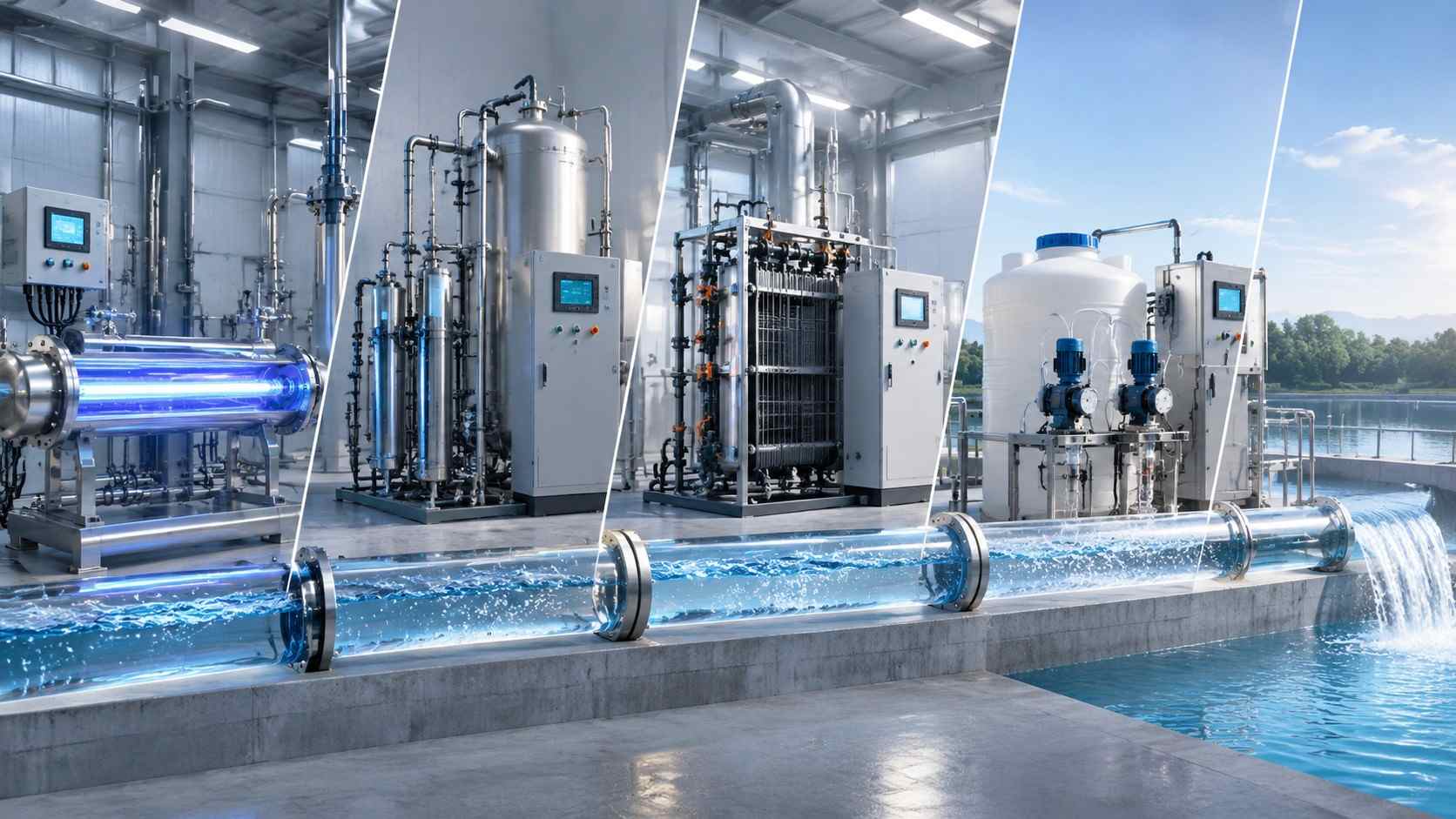
Different technologies require vastly different maintenance routines. Failing to account for consumable parts and specialized labor will destroy your operational budget. When evaluating your options, pay close attention to the replacement cycles:
• UV Disinfection Maintenance: Buyers often forget to budget for quartz sleeve cleaning and routine UV lamp replacements, which require periodic system shutdowns and specialized handling.
• Chlorine Disinfection System Selection: Traditional gas or bulk liquid systems require constant valve maintenance, leak detector calibrations, and high-level safety training for operators.
• Electro-Chlorination: While highly efficient, you must ensure the system uses premium titanium anodes to prevent premature cell failure and scaling, which minimizes manual acid-washing routines.
Industrial facilities and municipalities grow. Purchasing a system strictly designed for today’s flow rate is a short-sighted mistake. If the local population increases or your industrial production scales up, an inflexible disinfection unit will become a bottleneck, forcing you to replace the entire system prematurely.
Always look for modular skid-mounted designs. Modern on-site generation and ozone systems are built with scalable architectures, allowing operators to easily integrate additional electrolytic cells or ozone generators into the existing SCADA framework without tearing down the existing infrastructure.
Use this comparison table as a quick reference to align your facility's needs with the correct technology:
| Technology Type | Primary Maintenance Tasks | TCO (Total Cost of Ownership) Profile | Ideal Use Case |
| Onsite Chlorine Generation | Occasional cell acid wash, salt refilling | Low (High ROI due to eliminated chemical freight) | Municipalities, consistent network residual |
| UV Disinfection | Lamp replacement, quartz sleeve cleaning | Moderate (Frequent consumable replacements) | Clear water, zero chemical trace required |
| Ozone Treatment | Dielectric tube checks, oxygen prep maintenance | High (Significant power and initial CAPEX) | Advanced oxidation, odor & taste removal |
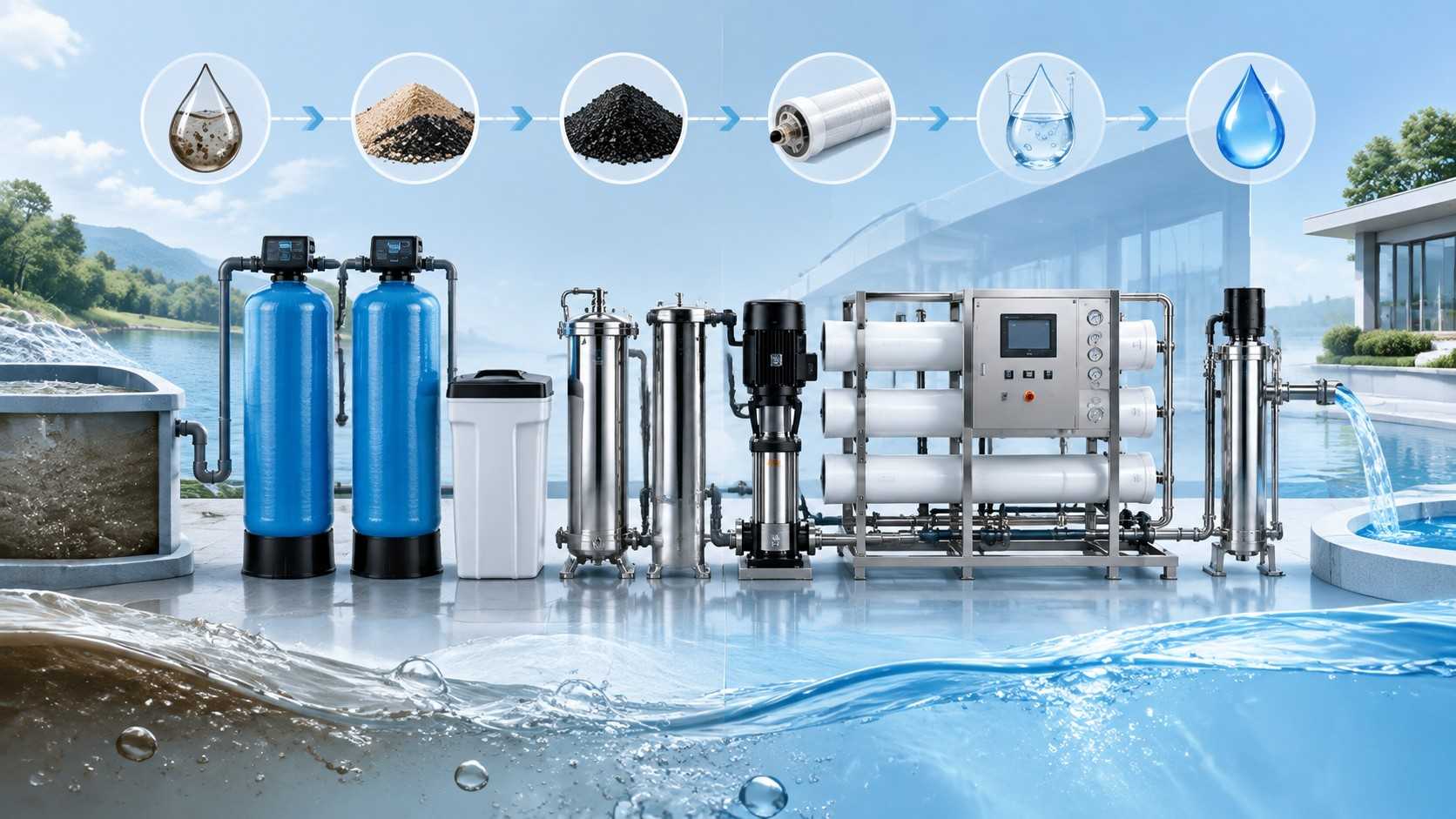
Avoiding common water disinfection equipment selection mistakes requires a holistic view of your plant's operations. By prioritizing the total cost of ownership, adapting to source water realities, and selecting scalable technologies like advanced onsite chlorine generation, you can ensure decades of safe, compliant, and cost-effective water treatment.
Q: How to select water disinfection equipment that fits my facility's specific budget?
A: Do not just compare the purchase price. Request a comprehensive 10-year TCO (Total Cost of Ownership) analysis from the manufacturer. This analysis should include equipment life expectancy, energy consumption, raw material costs (like salt vs. commercial bleach), and routine maintenance labor.
Q: Why is an onsite chlorine generation system highly recommended for industrial projects?
A: It entirely mitigates supply chain risks and hazmat safety liabilities. By producing a stable 0.8% sodium hypochlorite solution on demand, industrial facilities remain compliant with strict safety regulations while locking in incredibly low operational costs.
Q: What is the biggest mistake when replacing a legacy disinfection system?
A: The biggest mistake is "like-for-like" replacement without evaluating new technologies. Simply replacing an old chlorine gas system with a new gas system ignores modern advancements in electro-chlorination that could vastly improve plant safety and automation.
Droit d\'auteur @ Esegen (Guangzhou) Technology Co., Ltd Tous droits réservés.
 Supporté en réseau